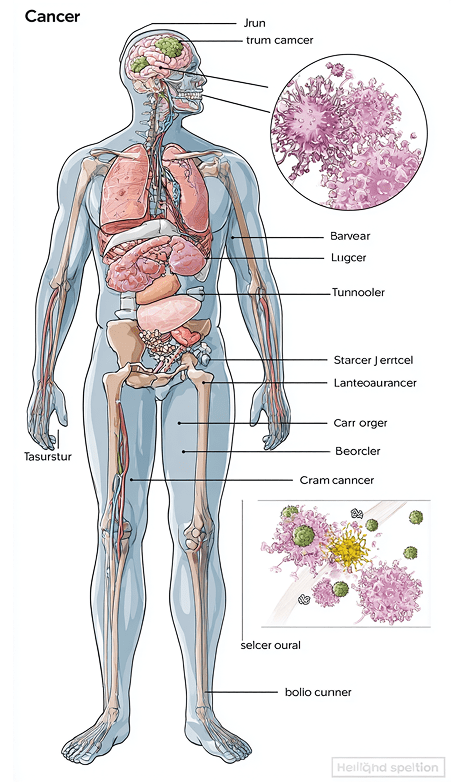
Cancer involves abnormal cells growing uncontrollably, invading nearby tissues, and spreading to other parts of the body through metastasis.
Overview and definition
Cancer is a broad term for a class of diseases characterized by the uncontrolled growth of abnormal cells. These cells can invade surrounding tissues and spread to other parts of the body, a process called metastasis. Understanding cancer involves recognizing its many forms and the biological processes that drive it. This overview covers the fundamental nature of cancer, its classification, and the differences between malignant and benign tumors.
How Cancer Starts in the Body
The human body is made of trillions of cells that normally grow and divide as needed. When cells become old or damaged, they die, and new cells take their place. Cancer begins when this orderly process breaks down. Genetic changes, or mutations, interfere with these signals, leading to uncontrolled cell growth. These abnormal cells can form a mass of tissue called a tumor.

The Difference Between Benign and Malignant

A tumor can be benign or malignant.
- Benign tumors are not cancerous. They can grow large, but do not invade nearby tissues or spread to other parts of the body. They are usually not life-threatening and can often be removed.
- Malignant tumors are cancerous. The cells in these tumors can invade surrounding tissues. Furthermore, cancer cells can break away from the original tumor and travel through the blood or lymph system to form new tumors in other organs. This spread is called metastasis.

Main Classifications of Cancer

Cancers are classified by the type of cell or tissue where they originate. The main categories include:
- Carcinoma: Cancers that begin in the skin or in tissues that line or cover internal organs. This is the most common type.
- Sarcoma: Cancers that start in connective or supportive tissues, such as bone, cartilage, fat, muscle, or blood vessels.
- Leukemia: Cancers that begin in the blood-forming tissue of the bone marrow. These cancers do not form solid tumors.
- Lymphoma and Myeloma: Cancers that start in the cells of the immune system.
Symptoms and Causes
Cancer’s signs can be general or specific to the affected organ. Less serious conditions often cause many symptoms. However, recognizing persistent changes and understanding risk factors are key to early detection, which significantly improves treatment outcomes.
General Warning Signs of Cancer
While symptoms vary widely by cancer type, some general signs should prompt a medical consultation, especially if they are new or persistent. These include:
- Unexplained weight loss
- Persistent fatigue that does not improve with rest
- A new lump, thickening, or swelling
- Unexplained pain that does not go away
- Changes in bowel or bladder habits
- A sore, ulcer, or mole that does not heal or changes appearance
- Unusual bleeding or discharge
- A nagging cough or hoarseness

What Causes Cancer?
Cancer is caused by changes (mutations) to the DNA within cells. These changes can be inherited or acquired. Acquired mutations are far more common and can result from external factors, such as carcinogens, or from random errors during cell division. Often, it is a complex combination of these factors rather than a single cause.
Modifiable vs. Non-Modifiable Risk Factors
A risk factor is anything that increases the chance of developing a disease.
- Non-Modifiable Risk Factors: Factors that cannot be changed. The single biggest risk factor for most cancers is aging. A family history of certain cancers can also increase risk due to inherited genetic mutations.
- Modifiable Risk Factors: These are related to lifestyle and environment and can be controlled. Key modifiable factors include tobacco use, excess alcohol consumption, poor diet, lack of physical activity, obesity, and exposure to UV radiation (sunlight) or certain chemicals.
30
Years of
Excellence
Trusted Worldwide
With patients from across the globe, we bring over three decades of medical expertise and hospitality to every individual who walks through our doors.
Book a Free Certified Online
Doctor Consultation
[elementor-template id=”207591″]
Table of Contents
[elementor-template id=”211216″] 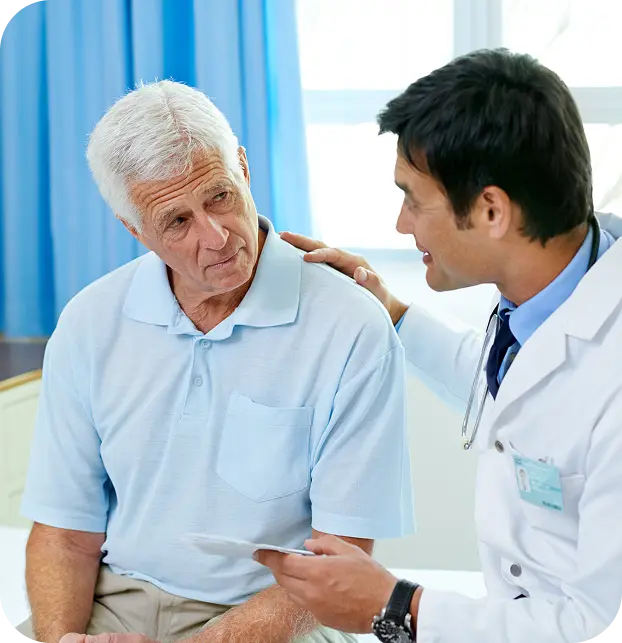
Diagnosis and Staging
A precise cancer diagnosis is essential for creating an effective treatment plan. The process begins with a physical exam and a review of medical history. While imaging tests like CT scans, MRIs, and PET scans provide images of a tumor’s size and location, a biopsy is the definitive diagnostic tool. This involves removing a small tissue sample for a pathologist to examine. Blood tests may also be used to detect tumor markers. This collective data is then used to “stage” the cancer, a critical step that determines the extent of the disease.
The Diagnostic Process: From Symptom to Biopsy
When a symptom suggests cancer, a doctor will begin with a thorough physical exam and a review of medical history. If a specific area is suspected, the next step is typically an imaging test to visualize the inside of the body. However, cancer can only be confirmed with a biopsy. This procedure involves a specialist (such as a surgeon or radiologist) taking a sample of the suspicious tissue. A pathologist then analyzes these cells under a microscope to confirm the presence of cancer and identify its specific type.
Imaging and Laboratory Tests
Doctors use several tools to diagnose cancer and determine if it has spread:
- Imaging Tests: CT, MRI, and PET scans produce detailed images of organs and tissues to detect tumors and measure their size.
- Laboratory Tests: Blood tests, such as a complete blood count (CBC), can reveal abnormalities that may indicate cancer. Specific tests for tumor markers (substances produced by cancer cells) can also help in diagnosis and monitoring.
- Endoscopy: A procedure where a thin, lighted tube is used to look inside the body, such as a colonoscopy for colon cancer.
Understanding Cancer Staging (TNM System)
Staging is the process of finding out how much cancer is in the body. The most common system used is the TNM system:
- T (Tumor): Describes the size and extent of the primary tumor.
- N (Nodes): Indicates whether the cancer has spread to nearby lymph nodes.
- M (Metastasis): Shows whether the cancer has spread (metastasized) to distant parts of the body. This information is combined to assign an overall stage (usually Stage I-IV), which is vital for planning treatment.
Treatment Details
Cancer treatment is highly personalized, based on the specific type, stage, and the patient’s overall health. Treatment plans often use a combination of methods. The primary goal may be curative (to remove all cancer), to control its spread, or palliative (to manage symptoms). These therapies are broadly divided into local treatments, like surgery and radiation, and systemic treatments, such as chemotherapy, which affect the entire body. A multidisciplinary team determines the optimal sequence.

Local Treatments: Surgery and Radiation Therapy

Local treatments target the cancer in a specific part of the body.
- Surgery: The goal is to physically remove the tumor and a margin of surrounding healthy tissue. For many early-stage solid tumors, surgery is the primary treatment.
- Radiation Therapy: This uses high-energy rays (like X-rays) to kill cancer cells. It can be used to shrink a tumor before surgery, kill any remaining cells after surgery, or as the primary treatment.
Systemic Treatments: Chemotherapy, Immunotherapy, and Targeted Therapy

Systemic treatments travel through the bloodstream to reach cancer cells throughout the body.
- Chemotherapy: Uses powerful drugs to kill fast-growing cells.
- Targeted Therapy: Uses drugs that “target” specific genetic changes or proteins in cancer cells, often with fewer side effects than chemotherapy.
- Immunotherapy: A treatment that boosts the body’s own immune system to find and destroy cancer cells more effectively.
- Hormone Therapy: Used for cancers that rely on hormones to grow, such as some breast and prostate cancers.
Palliative Care and Symptom Management

Palliative care is a specialized field focused on improving the quality of life for patients and their families. It is appropriate at any age and at any stage of a serious illness. This type of care focuses on relieving the symptoms and stress of the illness, such as pain, fatigue, and nausea. It can be provided alongside curative treatments.
The Medical Center
Choosing a cancer center is a critical decision. At Liv Hospital, our approach is centered on a multidisciplinary “Tumor Board.” This collaborative team, including oncologists, surgeons, and radiologists, reviews each case to create a unified plan. We are committed to using advanced diagnostic technology and offering the latest treatment protocols. Our philosophy extends beyond the disease to holistic care, supporting the patient and their family through every step of this complex journey.
The Multidisciplinary Tumor Board Advantage
In our center, cancer care is not the responsibility of a single doctor. Our Tumor Board brings together specialists from medical oncology, radiation oncology, surgery, pathology, and radiology. This team collaborates to review complex cases, discuss all possible treatment avenues, and develop a single, comprehensive treatment plan that reflects the collective expertise of multiple disciplines.
Advanced Technology in Diagnosis and Treatment
We utilize state-of-the-art technology for both precise diagnosis and effective treatment. This includes high-resolution imaging (such as PET/CT and 3T MRI) for accurate staging, and advanced radiation therapy techniques (like IMRT/VMAT) that target tumors while sparing healthy tissue. Our access to genomic testing also enables the use of targeted therapies and immunotherapies, positioning us at the forefront of personalized medicine.
Comprehensive Patient and Family Support
We understand that a cancer diagnosis affects the entire family. Our commitment to holistic care includes dedicated patient navigators to guide you through the treatment process. We also provide integrated support services, including nutritional counseling to manage side effects, psychological support to address the emotional and mental burden, and palliative care to ensure optimal symptom control and quality of life.
Book a Free Certified Online
Doctor Consultation
[elementor-template id=”207591″] 
FREQUENTLY ASKED QUESTIONS
What are the common side effects of chemotherapy?
I am item content. Click edit button to change this text. Lorem ipsum dolor sit amet, consectetur adipiscing elit. Ut elit tellus, luctus nec ullamcorper mattis, pulvinar dapibus leo.
How can I manage my diet during treatment?
I am item content. Click edit button to change this text. Lorem ipsum dolor sit amet, consectetur adipiscing elit. Ut elit tellus, luctus nec ullamcorper mattis, pulvinar dapibus leo.
What is immunotherapy and is it right for me?
I am item content. Click edit button to change this text. Lorem ipsum dolor sit amet, consectetur adipiscing elit. Ut elit tellus, luctus nec ullamcorper mattis, pulvinar dapibus leo.
How long will my recovery take after surgery?
I am item content. Click edit button to change this text. Lorem ipsum dolor sit amet, consectetur adipiscing elit. Ut elit tellus, luctus nec ullamcorper mattis, pulvinar dapibus leo.
What support services are available for patients and families?
I am item content. Click edit button to change this text. Lorem ipsum dolor sit amet, consectetur adipiscing elit. Ut elit tellus, luctus nec ullamcorper mattis, pulvinar dapibus leo.

RELATED VIDEOS
https://www.youtube.com/watch?v=XHOmBV4js_E
Understanding Your Cancer Diagnosis: A Beginner’s Guide
This video breaks down the basics of a cancer diagnosis, explaining common terms, what to expect, and questions to ask your doctor. A gentle introduction for newly diagnosed patients.
https://www.youtube.com/watch?v=XHOmBV4js_E
Navigating Treatment Side Effects: Tips for Comfort
Learn practical strategies and expert advice on managing common side effects like fatigue, nausea, and pain during cancer treatment. Find ways to improve your daily comfort and well-being.
https://www.youtube.com/watch?v=XHOmBV4js_E
Life Beyond Cancer: Thriving in Survivorship
Explore the journey of cancer survivorship, focusing on emotional recovery, long-term health, and embracing a fulfilling life after treatment. Hear inspiring stories and expert insights.
[elementor-template id=”211456″][elementor-template id=”186412″]